by Christopher L. Grachanen
Revision 7.0 of NAPT’s 17025 Lookup Freeware has been recently released with several new features Metrologists, calibration and auditing personnel will find most useful in evaluating test and measurement laboratory performance/compliance available at https://www.proficiency.org/resource/iso-iec-17025-2017-lookup-tool/.
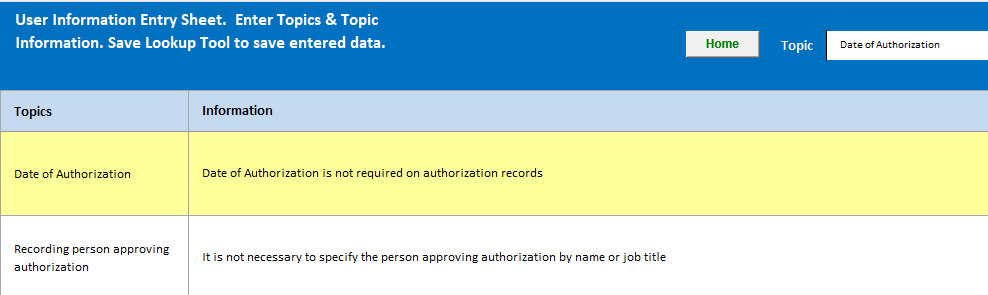
As 17025 Lookup has gain in popularity, users have expressed desire to be able to add information and guidance topics they have encountered via published papers, presentations. personal experience, etc. To this ends, a User Entry feature has been added which allows users to enter topic headers along with associated topic information. Topic headers are automatically added to a ‘Search’ dropdown menu for easy access coupled with a ‘Return to Home’ and ‘Copying Highlighted Text’ to Window’s Scratch Pad Several of the author’s informative topic tidbits have been added to get things started (see Fig. 1 snippet).
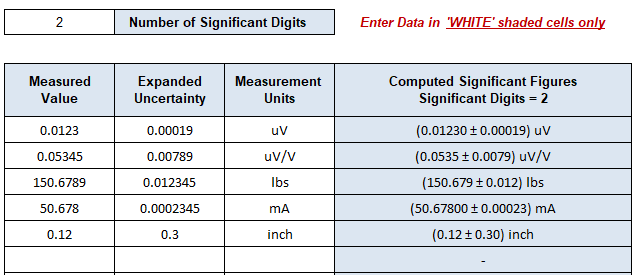
The second new feature deals with computing number of significant digits when reporting measured values with expanded uncertainties and associated units. Guidance is provided for determining number of significant digits as well as when significant digit rounding should occur when adding/subtracting and multiplying/dividing numbers. Significant digits rounding is available for 1, 2, and 3 digits (see Fig. 2).
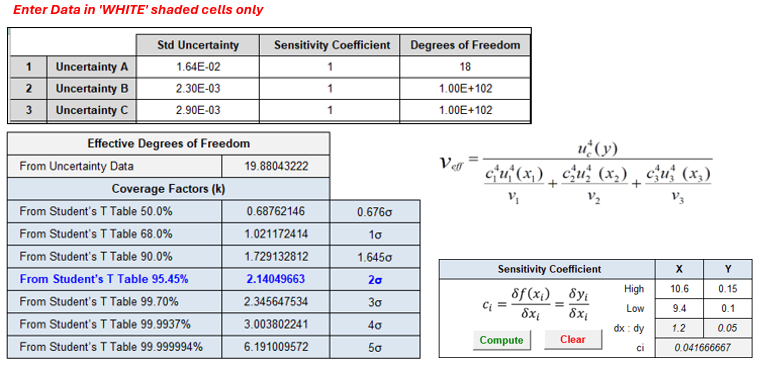
The next new feature for 17025 Lookup focuses on computing effective degrees of freedom using the Welch-Satterthwaite equation to determine coverage factors (k) for reporting measurement uncertainties. It is essential to calculate the effective degrees of freedom using the Welch-Satterthwaite equation when combining uncertainty components from different sources, especially when those sources have varying degrees of freedom. This ensures a more accurate representation of the uncertainty interval, particularly when dealing with a mix of Type A and Type B uncertainty evaluations. Additionally 17025 Lookup provides a means for calculating sensitivity coefficients (see Fig 3.0 snippet).
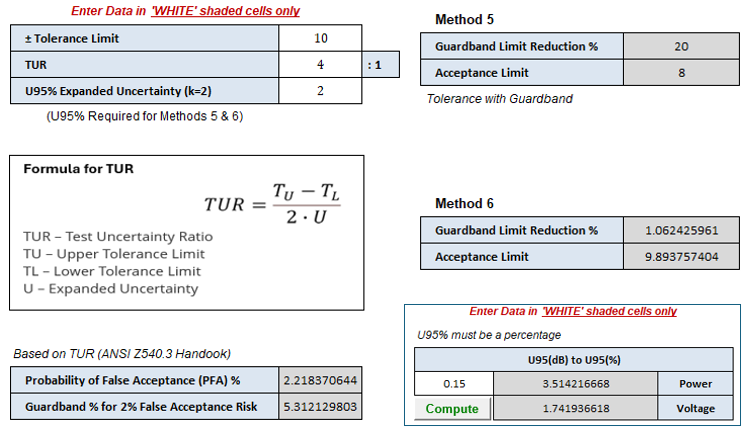
The fourth new feature for 17025 Lookup deals with popular guardbanding techniques. These included Method 5 & 6 from ANSI/NCSL Z540.3-2006, TUR and RSS methods. Conversion from logarithmic percentage to linear percentage is provided when dealing with dB, dBV, etc. (see Fig 4 snippet).