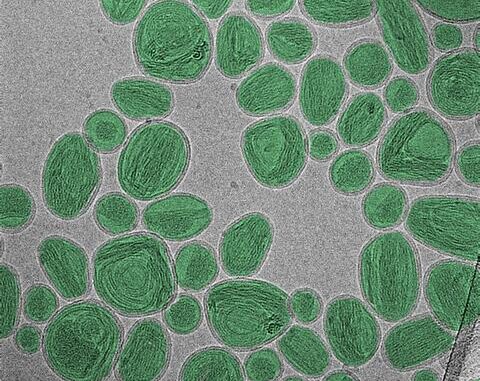
A colorized electron microscope image shows lipid nanoparticles containing a cancer drug. The amount of drug contained depends on the size of each nanoparticle. NIST researchers have developed a new analysis to better understand how the useful properties of nanoparticles depend on their size — in this example, to optimize drug delivery to cancer patients. The new analysis can also find use in other products that use nanoparticles and other nanomaterials, including electronics, ceramics and coatings.
Credit: Dr. Pierre-Alain Burnouf/Shutterstock, Natasha Hanacek/NIST
August 6, 2026
Nanoscience, which studies small objects, has a big problem. According to a team of scientists at the National Institute of Standards and Technology (NIST), the field confronts a pervasive error of data analysis that can give misleading insights into how these tiny objects’ properties depend on their size. The team also offers a practical solution — a mathematical correction that can reveal how these materials truly behave.
Future communications networks that are less vulnerable to hacking could be closer to reality with an invention that measures the properties of single-photon sources with high accuracy. Built by scientists at the National Institute of […]
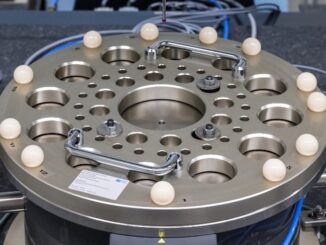
PTB-News 3.2024 – The deviations of rotary tables can be directly measured on coordinate measuring machines (CMMs) in all six degrees of freedom by means of a self-calibrating procedure using a ball plate. A new […]
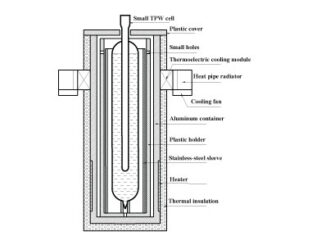
by Xiaoke Yan, et al. The influence of impurities on the shape of the freezing curves of the triple point of water (TPW) in three small TPW cells was investigated using the freezing curve analysis […]