
I began my career in Quality Assurance in the Metrology Industry working for a leader in the Global Metrology marketplace. I also worked for a brief stint in the Aerospace manufacturing sector. In my Metrology career I progressed upward through multiple positions such as Quality Administrator; Document Controller; Quality Inspector; Internal Auditor, and Accreditation Manager while increasing responsibility and expanding my understanding of ISO/IEC 17025. My most recent position was Manager Calibrations, Global Technical Operations where I managed daily operations of the internal Calibration lab at NSF to include CapEx and Annual Budgets; LIMS implementation and improvement; Measurement Uncertainty; SOP development and maintenance; Proficiency Plan management and analysis; lab CARs; Outsource Management; Customer Service Management; Outsource Vendor Management; Supplier CAPAs; hiring and management of technical team as well as their training; technical expert for the global labs; performing dimensional, pressure, and temperature calibrations and more.
Articles
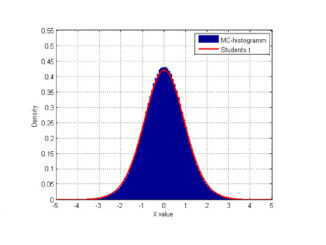
On the Probabilistic Interpretation of Type A Uncertainty: A Proposal for Normalization of Student’s t Distributions
by Manuel Rodriguez Higuero The Guide to the Expression of Uncertainty in Measurement (GUM) [1] and its Supplement 1 based on Monte Carlo propagation (GUM-S1) [2] currently coexist as two conceptual frameworks that are partially […]
Articles
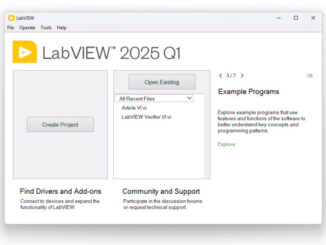
Automating Calibration with LabView
by Ajayvignesh Manonmani Velumani Calibration verification is a critical step in ensuring that instruments function within their specified tolerances. Before calibration begins, it is essential to verify whether an instrument is operating within acceptable limits. […]
Archives
Assessment of Compliance with Specifications
by John Hurll Volume 16:4, Oct-Dec 2009 It is often the case that it will be necessary to provide information in calibration reports about whether or not the stated results for general purpose test and […]