
The NIST fiber probe is a Coordinate Measuring Machine (CMM) probing system intended for diameter and form measurement of micro features and small holes. The Moore M48 CMM at NIST can measure holes down to 500 μm diameter with the Movamatic probe; the NIST fiber probe extends the range to less than 100 μm diameter. Over the last several years, we have performed numerous precision dimensional and form measurements using this probe mounted on the M48 CMM. We have measured size (diameter and thickness) and form (circularity, sphericity, straightness, flatness, conicity) on artifacts such as fiber optic ferrules, fuel injector nozzle holes, knife-edge and cylindrical apertures, ruby spheres, gage blocks, micro gears, and other micro-features on meso-scale components. We briefly describe the probing system and then present a few of the different applications we have studied, highlighting the challenges they represent and the measurement advances our probing system has offered. More importantly, these applications serve to highlight a new calibration service NIST can now offer industry — the dimensional measurement of micro-features at ultra-low forces.
News
Improving accuracy of international standards for graphene | NPL News
The results of the first international comparison of the measurement of graphene have been published in 2D Materials, led by NPL, through the Versailles Project on Advanced Materials and Standards (VAMAS) and in collaboration with […]
News
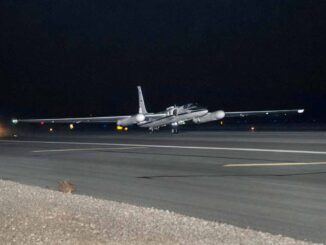
NIST Moonlight Data Will Help Satellites Get a More Accurate Look at Earth | NIST News
May 20, 2025 Weather forecasting, mineral prospecting and farming all could improve from a trove of data the National Institute of Standards and Technology (NIST) recently gathered about moonlight, late at night and far […]
News
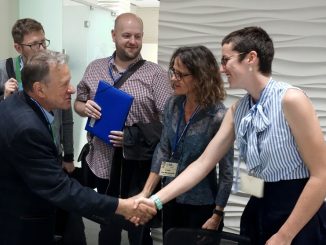
Scientists from leading Radionuclide Laboratories met in VNIIM | News
D.I. Mendeleyev Institute for Metrology held a Working Meeting of the International Committee for Radionuclide Metrology (ICRM). Delegates from National Metrology Institutes and Radionuclide Laboratories from the US, Germany, Spain, Switzerland, China, Brazil, Australia, Slovakia, […]